This week, on the 11th of Cheshvan, we mark the anniversary of the passing of our mother Rachel — Mama Rachel.
Rachel’s Tomb, the burial place of our matriarch Rachel, the wife of our patriarch Jacob, is located in the city of Bethlehem, south of Jerusalem. Jacob buried her there because she passed away while giving birth to their son Benjamin.
Rashi explains why Jacob did not bring her to burial in the Cave of Machpelah in Hebron, where the patriarchs were buried:
“Know that by Divine command I buried her there, so that she would be a help to her children when Nebuzaradan exiled them. As they passed by that place, Rachel would emerge upon her grave, weeping and pleading for mercy on their behalf.”
As it is written:
“A voice is heard in Ramah, lamentation and bitter weeping; Rachel weeps for her children…”
And the Holy One, blessed be He, answers her:
“Restrain your voice from weeping and your eyes from tears, for there is reward for your deeds, says the Lord… and the children shall return to their borders.”
(Jeremiah 31)
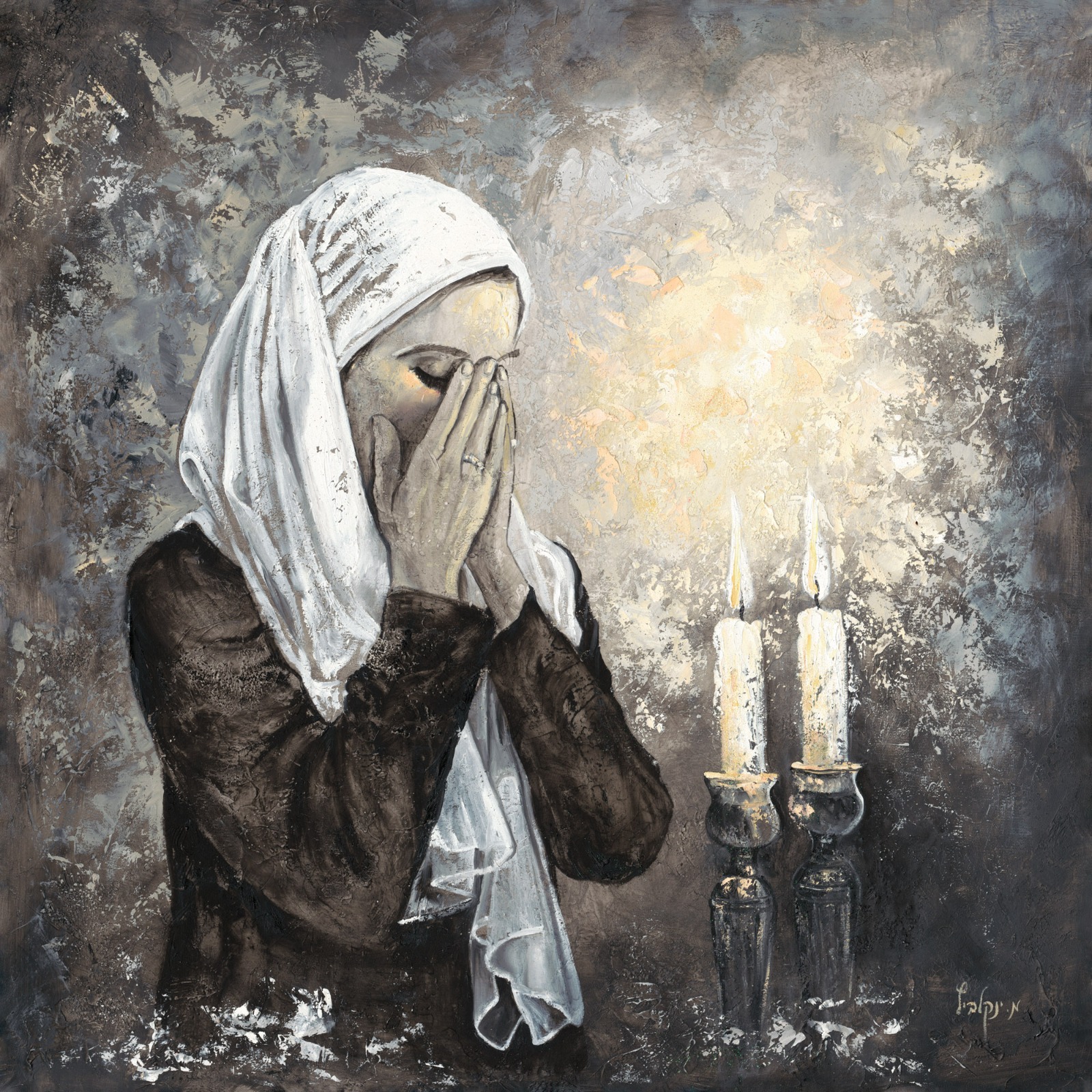
From that time until today, the Tomb of our mother Rachel has remained a place of powerful prayer and profound spiritual connection. All the great sages of Israel throughout the generations have encouraged pouring out one’s heart there in prayer.
Visitors from all over the world come to Rachel’s Tomb to lift their prayers and seek comfort in times of joy, sorrow, or distress, for Rachel’s prayers possess a unique power to intercede and plead for salvation on behalf of her descendants.
Over the years, countless astonishing stories have been gathered about miraculous events and prayers answered after praying or giving charity at Rachel’s Tomb. People tell of healings, salvations, good tidings, rescues from complicated situations, and an abundance of exalted deliverances beyond all imagination.
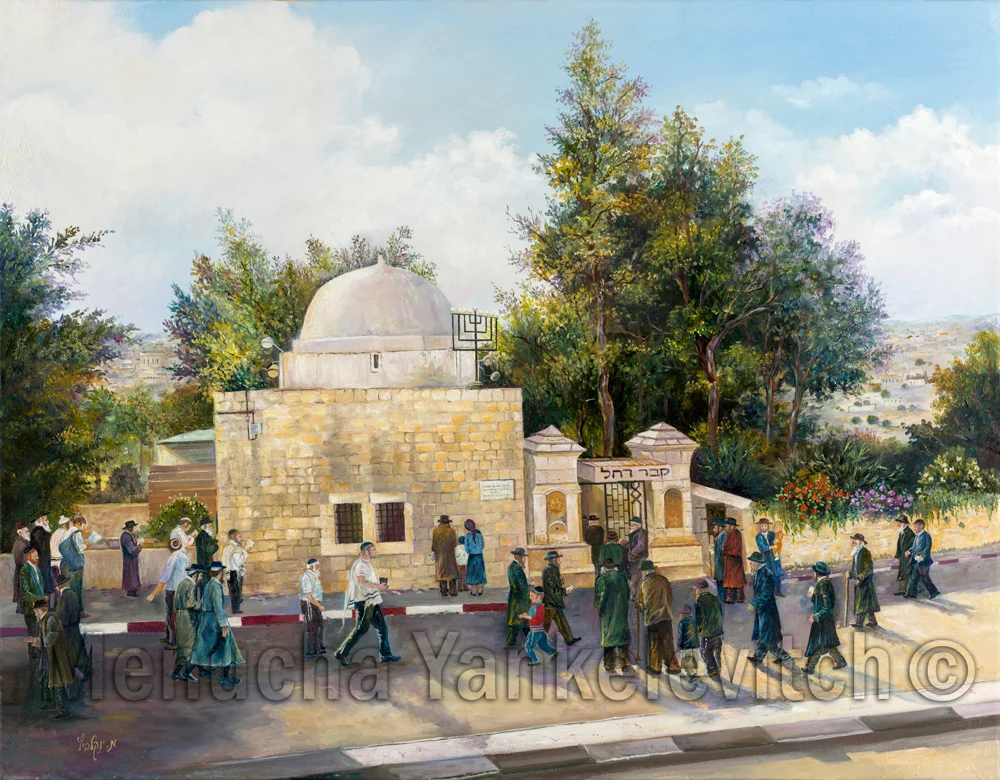
My connection to Rachel’s Tomb began in my childhood, when I traveled there with my mother or my grandmother to pray.
This was more than fifty years ago. To get there, we traveled on an Arab bus—without fear. The place enchanted me completely, both inside and out. At the entrance to the tomb stood two carved stone pillars with an iron gate between them.
The tomb itself was a beautiful structure, with a unique domed roof and intricate architectural details. Inside hung a lovely chandelier and an embroidered curtain. Women dressed in the authentic garments of their places of origin clung to the tomb in supplication, crying freely and without restraint, drawing everyone around them into a shared outpouring of the heart.
Outside, a perfect tapestry of color unfolded: Arabs and Jews walking freely together, alongside donkeys and camels. Market stalls run by local Arabs offered their wares—clay vessels, wooden camels—and all around stretched an ancient, magical landscape.
A spiritual and experiential journey!
Over the years, the landscape changed, and the times changed. The increase in visitors and fear of Arab hostility led to the construction of a protective wall and constant security.
Yet the spiritual experience within the expanded compound remained—and even intensified.
Even today, I am blessed, thank God, to occasionally stop by and pray at Rachel’s Tomb. I always feel joy and a deep sense of connection, of being close to Mother Rachel.
In my adulthood, I have never stopped painting Rachel’s Tomb, depicting it in different styles according to the artistic phase I am in at the time.
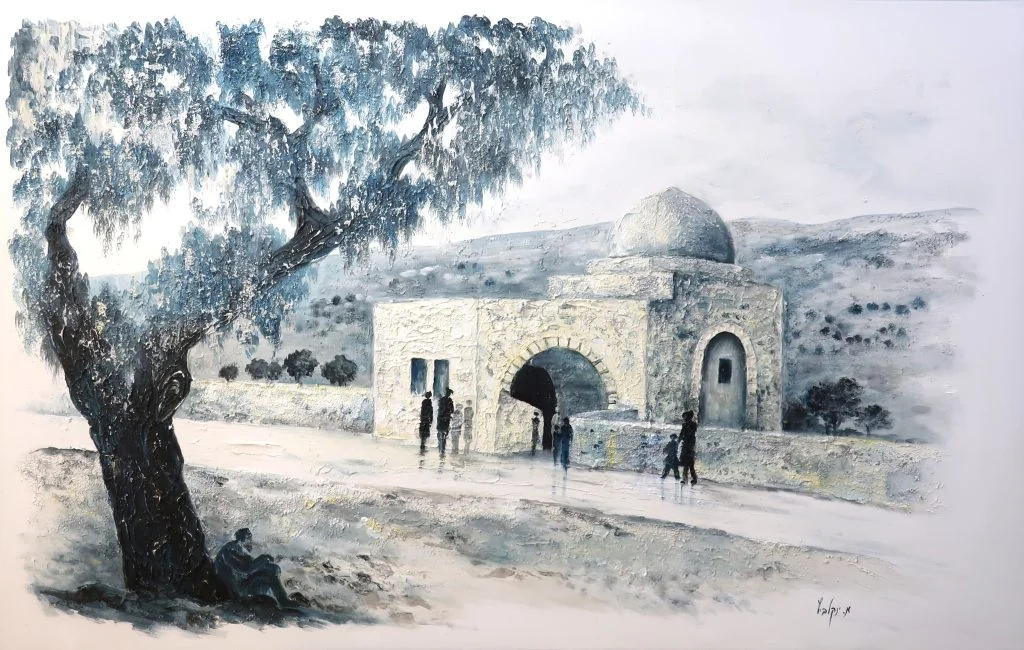
The crowning highlight of my paintings of Rachel’s Tomb is the white style—elegant, clean, and refined. Some incorporate gold leaf, all of them intended to emphasize the holiness that characterizes Rachel’s Tomb.
More on this in the following article.
And as someone once said:
“The diversity of Menucha Yankelowitz’s styles allows her to capture different facets of Rachel’s Tomb and to evoke a wide range of emotional responses from viewers. This is a testament to her skill as an artist and to her deep connection with the subject.”
You cannot copy content of this page